
The Most Powerful Meeting in Special Education Almost Nobody Uses
- Sarah Singleton

- 3 days ago
- 3 min read
How MAP Meetings Help Teams Build More Meaningful, Student-Centered IEPs
When most people think about special education meetings, they picture discussions about goals, accommodations, service minutes, evaluations, and placement decisions. While those conversations are important, there’s one type of meeting that has the power to completely change the direction and tone of the IEP process and almost nobody uses it.
It’s called a MAP meeting, which stands for Making Action Plans.
Honestly, I believe MAP meetings should be a much more common part of special education planning, especially when:
a student has a new IEP team
families and schools are struggling to collaborate
a transition is approaching
the team feels disconnected from the student as a person
the IEP process has become overly compliance-focused
So, What Is a MAP Meeting?
A MAP meeting is a person-centered planning process designed to help teams better understand the student beyond academics, testing, or labels.
Unlike a traditional IEP meeting that often jumps directly into concerns, goals, and services, a MAP meeting begins with the student’s story.
Parents are encouraged to invite anyone relevant in the students’ life including, but not limited to:
the student themself
family members
educators
therapists
coaches
friends
community members
and anyone else who plays an important role in the child’s life
The purpose is to create a shared vision for the student’s future.
What Happens During a MAP Meeting?
During the meeting, the team walks through guided conversations about:
the student’s history
strengths and gifts
interests and passions
dreams for the future
fears or concerns
support needs
meaningful relationships
long-term goals
what success looks like for the student
These conversations help shift the focus from: “What services does this student qualify for?” to: “Who is this student, and what kind of life are we helping them build?”
That shift matters.
Why MAP Meetings Are So Powerful
One of the biggest frustrations many families experience during the IEP process is feeling like their child is reduced to scores, data, or an eligibility category.
MAP meetings help change that dynamic.
Instead of beginning with limitations, the process begins with:
connection
collaboration
strengths
understanding
and shared vision
When teams truly understand the student as a whole person, the IEP becomes more individualized and meaningful.
Goals become more connected to real life.
Supports become more purposeful.
And the entire team often communicates differently because everyone has taken time to build a deeper understanding of the student.
MAP Meetings Are Especially Helpful When…
A MAP meeting can be incredibly beneficial:
before developing a new IEP
during major school transitions
when entering middle or high school
before transition planning
when a student is joining a new school team
after difficult or conflict-heavy meetings
when families feel unheard
when teams need to rebuild trust and collaboration
Building the IEP Around the Student’s Future
One of the most meaningful parts of a MAP meeting is that it helps the team build the IEP around the student’s actual future goals and vision for their life.
Instead of creating isolated goals disconnected from real-life outcomes, the team asks:
What does this student want for their future?
What skills will help them get there?
What supports are needed now?
How can school experiences become more meaningful and inclusive?
This creates a more student-centered process where supports, goals, and services align with authentic outcomes, not just compliance requirements.
Want Help Holding a MAP Meeting?
I would love to see MAP meetings become a more common part of the IEP process.
If you’re interested in holding a MAP meeting but don’t know where to start, I offer consultation and support to help families:
Facilitate a MAP meeting
prepare for the meeting
identify participants
facilitate discussion topics
organize ideas into actionable next steps
connect MAP outcomes to the IEP process
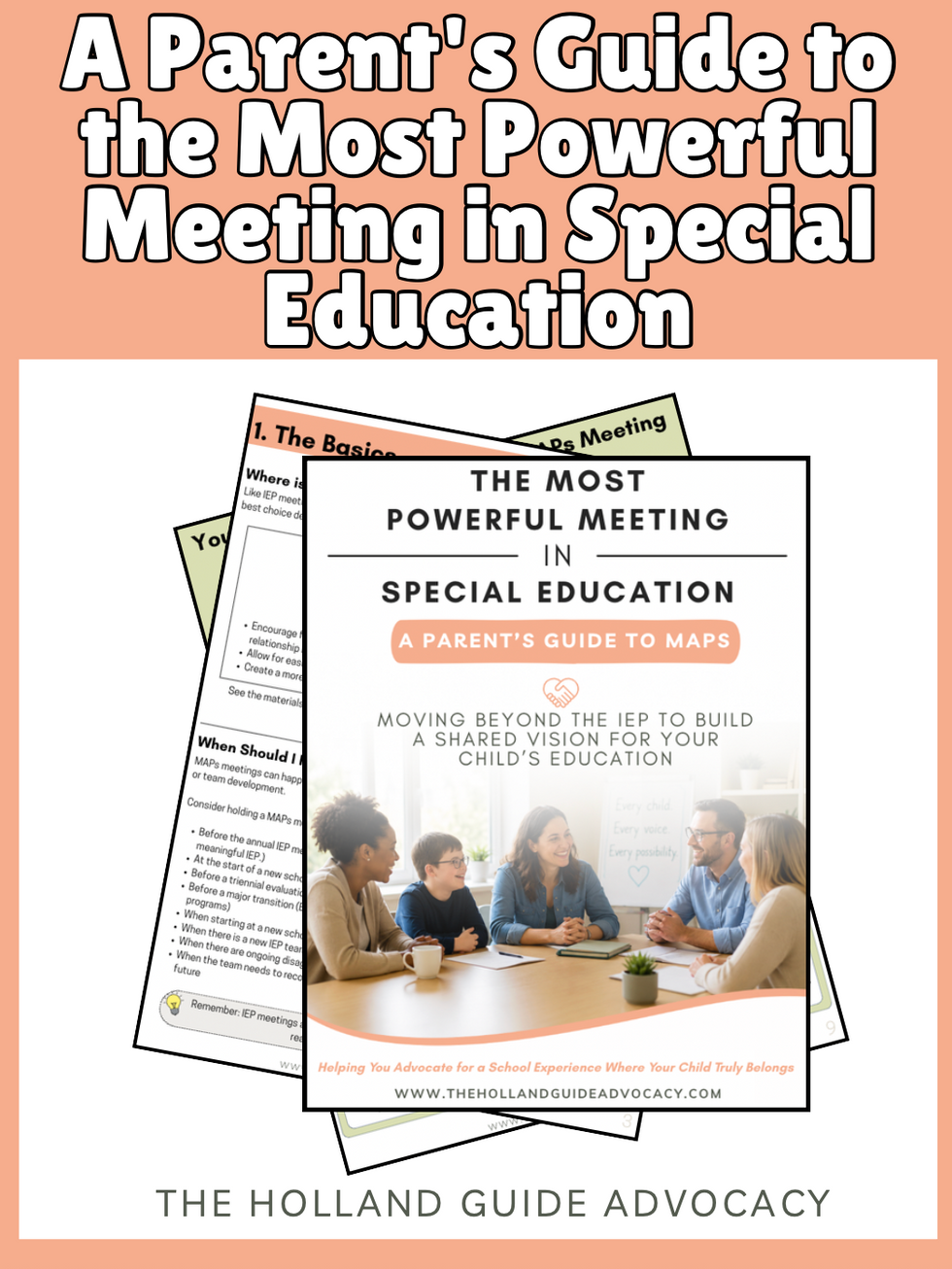
MAP Meeting Guide & Handout
To help families and teams get started, I’ve also created a MAP Meeting Guide & Handout that walks you through the process step-by-step.
The guide includes:
an overview of MAP meetings
guided discussion prompts
vision and goal brainstorming sections
participant planning tools
action-step organizers
This resource is designed to help families feel prepared and confident leading meaningful conversations about their child’s future.



Comments